Buyer’s Guide · Factory–Direct
5 Secrets to Spotting Real Chinyoti Furniture in Chiniot
Planning a trip to Chiniot? Our guide reveals 5 secrets to identifying authentic classic Chinyoti furniture and avoiding common fakes. Shop smarter.
- 15+Years
- ISOCertified
- 2–YrWarranty
- 5,000+Delivered
A trip to Chiniot in search of furniture is a rite of passage for many Pakistani families, and for good reason. The city is legendary for its woodworking, but how do you find genuine, classic Chinyoti furniture amid a sea of options? As sofa makers ourselves, we have a deep respect for this heritage and want to help you bring a true piece of artistry into your home.
At its heart, Chinyoti furniture is a story of skill passed down through generations. But spotting that quality takes a trained eye. This guide will give you the five essential secrets our team uses to distinguish master craftsmanship from mass-produced imitations.
Key takeaways
- Inspect the Wood: Authentic Chinyoti furniture is almost always made from solid Sheesham (Rosewood). Learn to recognise its weight and distinctive grain.
- Examine the Carvings: Real hand-carving is deep, crisp, and has a natural flow with minor, unique imperfections. Machine work is often shallow and repetitive.
- Check the Construction: A quality piece relies on strong joints (like mortise and tenon), not just glue and staples. It should feel solid and sturdy.
- Understand the Finish: A good polish enhances the wood's natural beauty. A thick, opaque finish can be a red flag, often used to hide inferior materials.
- Talk to the Maker: True artisans are proud of their craft and can discuss their process. Flexibility for customization is a great sign of a genuine workshop.
Secret #1: The Soul of the Wood – It Must Be Sheesham
The foundation of any piece of classic Chinyoti furniture is the wood itself. The gold standard, used for centuries by Chinioti artisans, is Sheesham, also known as Indian Rosewood. It’s chosen for its incredible durability, natural resistance to termites, and beautiful, dense grain that holds intricate carvings exceptionally well.
Unfortunately, many lookalike pieces are made from cheaper, lighter woods like Partal or even MDF with a Sheesham-coloured veneer. These materials simply don't have the longevity or the strength to support the detailed carving that defines this style.
How to Spot Real Sheesham
- Feel the Weight: Sheesham is a hardwood and is noticeably heavy. If a sofa frame or table feels surprisingly light, be cautious. This is the quickest and most practical test you can do in a workshop.
- Look at the Grain: Real Sheesham has a distinctive, rich grain with interlocking patterns. You'll often see a beautiful contrast between the darker heartwood and the lighter sapwood. A uniform, printed-on look is a sign of a cheap imitation.
What this means for you: A sofa built with solid Sheesham is an investment that will last for generations. It won't warp easily and can withstand the rigours of a busy family home, becoming a true heirloom piece that holds its value and beauty over time.
Secret #2: Reading the Carvings – Artistry vs. Assembly Line
The carving is the most iconic element of Chinyoti furniture. This is where the skill of the karigar (artisan) truly shines. Authentic hand-carving is a time-consuming process, and the results are vastly different from what a machine can produce.
Hand-carved designs, whether floral motifs or geometric patterns, have a certain life to them. The lines are deep and crisp, but they also have a natural flow. You might even spot tiny, charming imperfections that prove a human hand was at work. In contrast, CNC machine carvings are perfectly uniform, often appearing shallow and with softer, less defined edges. They lack the soul and character of a handcrafted piece.
How to Differentiate the Carving
- Depth and Sharpness: Run your fingers over the carvings. Genuine work feels deep and the edges of the patterns are well-defined. Machine work often feels superficial.
- Symmetry and Flow: Look for perfect, mirror-image symmetry. While a master artisan is incredibly precise, slight variations are a hallmark of hand-craftsmanship. Machine work is flawlessly, and often lifelessly, repetitive.
What this means for you: Choosing a hand-carved sofa means you are bringing a unique piece of art into your living room. No two hand-carved pieces are ever exactly identical. It’s a statement of appreciation for true Pakistani craftsmanship that elevates your entire space.
Secret #3: The Unseen Strength – Joints, Not Just Glue
How a sofa is held together is just as important as the wood it's made from. A beautiful piece that starts to wobble and creak after a year is a disappointment. True Chinyoti craftsmen use time-honoured joinery techniques to ensure structural integrity.
Look for evidence of strong joints like mortise and tenon, where one piece of wood is shaped to fit snugly into a hole in another. This method creates a powerful, lasting bond. Lower-quality furniture often relies heavily on glue, screws, and staples, which can loosen over time, especially on a large 7-seater sofa that sees daily use.
How to Check the Construction
- The Wiggle Test: Gently push on the arms and the back of the sofa. It should feel completely solid, with no give or creaking. A well-built frame is a single, sturdy unit.
- Ask the Maker: Don’t be shy. Ask the craftsman or workshop owner how the frame is constructed. A proud maker will be happy to explain their joinery techniques.
What this means for you: A sofa with strong, traditional joinery is built for life. It provides the stable and reliable foundation your family needs, ensuring your investment is safe, comfortable, and durable for years to come.
Secret #4: The Final Touch – Understanding the Polish
The finish, or polish, is the final step that protects the wood and brings out its natural beauty. A high-quality polish on a Chinyoti sofa should enhance the grain of the Sheesham, not hide it. Artisans typically use finishes like lacquer or shellac, applying them in thin layers to create a deep, lustrous sheen that feels smooth to the touch.
A common trick to cut costs is to use a thick, dark, and opaque polish. This is often a major red flag. This type of finish can be used to hide imperfections, cover up the use of cheaper wood, or conceal filler materials like putty used to patch up poor craftsmanship.
How to Judge the Finish
- Clarity: You should be able to clearly see the natural grain and texture of the wood through the polish. If it looks like a flat, plastic-like coat of paint, be wary.
- Feel: A quality finish feels smooth and deep, not sticky or rough.
What this means for you: A proper finish not only makes the furniture look stunning but also protects the wood from moisture and daily wear. It ensures your sofa is easier to clean and maintain, preserving its regal look for the long haul.
Secret #5: The Maker's Mark – Reputation and Customization
Finally, the best way to ensure you're getting an authentic piece is to know your maker. A true Chinyoti artisan or a reputable workshop is not just a seller; they are the custodian of a craft. They will be proud to talk about their work, the origin of their wood, and the time it takes to create a piece.
One of the best signs of a genuine, skilled workshop is the ability to customize. Can they take a classic design and adapt it for you? For instance, can they build a Chinyoti-style L-shaped sofa for your TV lounge or use a modern velvet fabric on a traditional frame? A maker who only offers one-size-fits-all, take-it-or-leave-it options may be a reseller, not a creator. This level of expertise is crucial, and it's a principle that applies whether you are in Chiniot or learning how to avoid mistakes when buying a carved wooden sofa in Peshawar.
What this means for you: Working with a flexible and knowledgeable maker ensures you get a piece that is not only authentic but also perfectly suited to your home's layout and your family's style. You get the best of both worlds: timeless craftsmanship and modern functionality.
Spotting the Difference: A Quick Comparison
To make things easier, here’s a simple table summarising what to look for.
| Feature | ✅ Authentic Chinyoti Furniture | ❌ Mass-Produced Imitation |
|---|---|---|
| Wood | Solid, heavy Sheesham with visible, rich grain. | Lighter wood (e.g., Partal), MDF, or veneer. Feels light. |
| Carving | Deep, crisp, with natural flow and minor variations. | Shallow, uniform, with soft or fuzzy edges. Perfectly repetitive. |
| Joints | Solid construction using mortise & tenon. No wobbling. | Heavy reliance on glue, staples, and screws. May feel unstable. |
| Finish | Clear, deep polish that reveals the wood grain. | Thick, opaque polish that hides the wood. Looks plastic-like. |
| Maker | Proud to discuss their craft; offers customization. | Evasive about process; limited, fixed options available. |
Bringing a Chinyoti Masterpiece into Your Modern Home
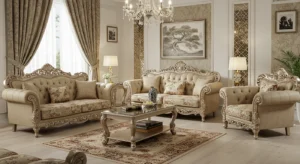
Many people think classic Chinyoti furniture only belongs in a formal, traditional drawing-room. We believe its beauty is timeless and incredibly versatile. A beautifully carved Chinyoti sofa can serve as a stunning statement piece in a contemporary home, creating a rich contrast with modern decor.
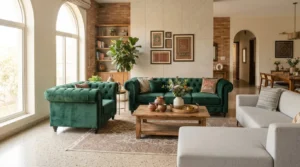
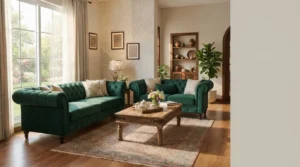
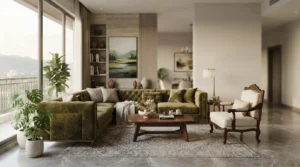
Imagine a classic carved frame upholstered in a bold, luxurious velvet, or a custom-designed Chinyoti L-shaped sofa that combines heritage craftsmanship with a layout perfect for modern family living. This blend of old and new is where true style lives. Understanding the value and craftsmanship is the first step, a journey we've explored in detail when looking at the Chinyoti sofa set price in Chiniot. It's not just about finding something sasta aur acha (cheap and good), but about finding lasting value.
As a factory-direct manufacturer, we specialize in bringing these possibilities to life. We combine the revered techniques of Chinyoti carving with the custom designs—be it a 7-seater, L-shape, or a unique creation—that modern Pakistani homes require. And with free delivery across the country, we bring this heritage right to your doorstep.
We hope these secrets help you on your journey to finding the perfect sofa. A genuine Chinyoti piece is more than just furniture; it’s a piece of Pakistani heritage. If you’re looking for a sofa that combines this timeless artistry with modern comfort and a design tailored just for you, our team is here to help. Get in touch and let’s create something beautiful for your home.